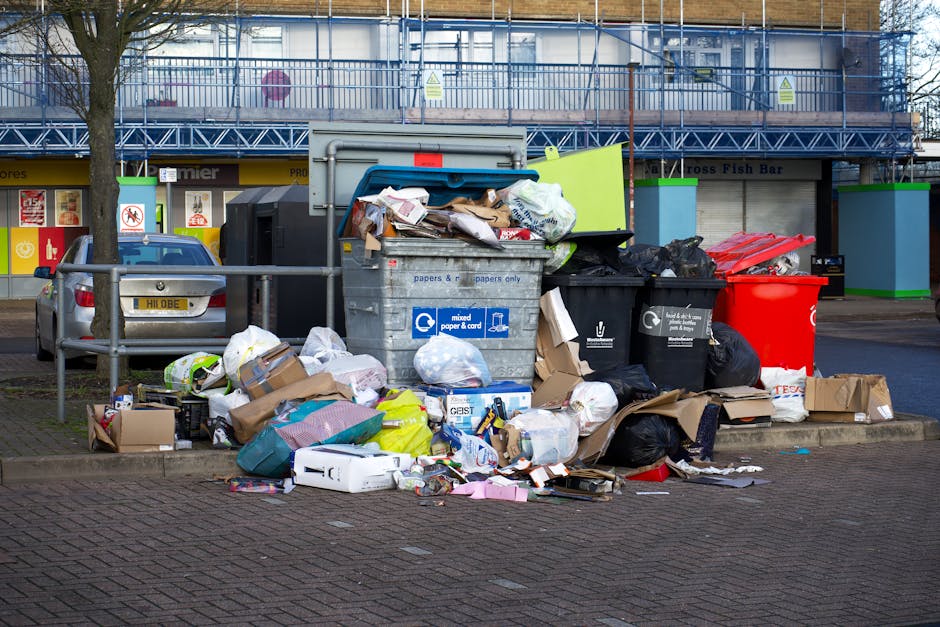
SW18 estate guide to rubbish clearance near Southfields Station
If you live on an SW18 estate near Southfields Station, rubbish clearance can feel oddly complicated. One minute it is a couple of broken chairs and a bag of old bits; the next, you are wondering how to move bulky items down stairs, what can be taken, and whether the skip you were considering is even practical on a tight residential road. This guide to rubbish clearance near Southfields Station brings the whole thing down to earth. It explains how the process works, what to expect, where people go wrong, and how to choose a cleaner, safer route for flats, maisonettes, houses, and estate properties across SW18.
Truth be told, most people do not need a lecture on waste. They need a plan that works on a Tuesday morning when the lift is out, the pavement is busy, and the pile by the front door is starting to become annoying. So that is what this article is for: clear, useful advice with local realism, not fluff.
Practical takeaway: if your rubbish includes bulky furniture, mixed household waste, loft clutter, garden cuttings, or post-renovation debris, a well-planned clearance service often saves time, reduces stress, and avoids the "where on earth do we put this?" problem that comes with estate living.
Where relevant, you may also want to explore waste removal for general mixed waste, or the more specific pages for flat clearance, house clearance, loft clearance, and furniture disposal if your job has a clearer shape.
Table of Contents
- Why SW18 estate guide to rubbish clearance near Southfields Station Matters
- How SW18 estate guide to rubbish clearance near Southfields Station Works
- Key Benefits and Practical Advantages
- Who This Is For and When It Makes Sense
- Step-by-Step Guidance
- Expert Tips for Better Results
- Common Mistakes to Avoid
- Tools, Resources and Recommendations
- Law, Compliance, Standards, or Best Practice
- Options, Methods, or Comparison Table
- Case Study or Real-World Example
- Practical Checklist
- Conclusion
- Frequently Asked Questions
Why SW18 estate guide to rubbish clearance near Southfields Station Matters
Estate rubbish clearance is not just about getting rid of stuff. On SW18 estates near Southfields Station, it is often about access, shared spaces, neighbours, and timing. You may have stairwells with awkward turns, limited parking, controlled loading areas, or bin stores that are already under pressure. That changes the way rubbish should be handled.
For many residents, the main issue is not the waste itself but the logistics around it. A sofa in a top-floor flat is a different task from a sofa in a ground-floor maisonette. A bag of builder's rubble is not the same as a few old boxes from a cupboard, even if both look like "just rubbish" from a distance. And let's face it, estate corridors are not the place for improvisation.
This matters because poor clearance planning can lead to damage to communal areas, delays, complaints, or even unsafe lifting. It can also create confusion over what can be removed together and what should be separated. A clear approach helps keep the estate tidy, reduces stress for residents, and usually makes the whole job quicker.
Another reason it matters is cost control. When you understand the type and volume of rubbish, you are better placed to choose the right service instead of overpaying for a bigger collection than you need. That can make a meaningful difference, especially if the clearance is tied to a move, tenancy change, refurbishment, or family clean-out.
If the clearance includes specific items, the service route may also matter. For example, bulky household items may fit a furniture clearance approach, while mixed estate clutter may suit broader home clearance or house clearance support.
How SW18 estate guide to rubbish clearance near Southfields Station Works
In practical terms, rubbish clearance usually follows a simple pattern. You identify the waste, check access, book a collection, and have the items removed and sorted. The details, though, are where the work actually happens.
1. Identify what needs removing
Start by separating the rubbish into rough groups. Think in terms of bulky furniture, general household waste, light renovation debris, garden waste, and anything sensitive or potentially restricted. This makes it easier to estimate the amount of space needed and avoid awkward surprises on the day.
2. Check access around the estate
Estate access matters a lot near Southfields Station. Is there lift access? Is the stairwell wide enough for a wardrobe or bed base? Can a vehicle stop close by without blocking the estate entrance? Is there a narrow turning point or a time window when loading is sensible? These are the little things that decide whether the clearance feels smooth or mildly chaotic.
3. Match the job to the right clearance type
Some jobs are best treated as single-category removals. Others are mixed. A garage full of old tools and boxed junk may be better handled through garage clearance. A dusty loft, meanwhile, is often easier to clear with loft clearance. If the work is commercial, it may lean toward business waste removal or office clearance.
4. Book a collection and confirm the details
Before the collection, confirm what is being removed, where it is located, and whether there are any access issues. A good clearance plan sounds boring on paper. That is usually a sign it will work well in real life.
5. Sort, load, and dispose responsibly
Good rubbish clearance is not just about hauling everything away. Items are usually sorted for reuse, recycling, or disposal where appropriate. If the company offers a clear sustainability approach, that is a strong sign they are thinking beyond simple collection. You can read more about this in the site's recycling and sustainability information.
Key Benefits and Practical Advantages
A well-run rubbish clearance service offers more than convenience. On a busy SW18 estate, the advantages often show up in very everyday ways.
- Less lifting for residents: bulky or heavy waste can be removed without you wrestling it down stairs or across shared paths.
- Cleaner communal areas: rubbish does not sit around outside the block while people figure out what to do next.
- Faster turnaround: useful when you are leaving a flat, preparing a sale, or getting ready for works.
- Better sorting: reusable items and recyclable material can be handled more intelligently than a one-size-fits-all approach.
- More predictable planning: you know who is coming, what they are taking, and roughly how the visit will unfold.
- Less disruption to neighbours: which, to be fair, matters a lot on estates where everyone notices a trolley moving at 8am.
There is also a quiet emotional benefit. A cluttered flat or bin store can weigh on you. Once it is gone, the whole place feels lighter. Sometimes the air changes a bit, especially in an old room with a long-neglected pile by the wall. Small thing, maybe. But people notice it.
For awkward or mixed jobs, it can help to compare related services such as builders waste clearance for renovation debris or garden clearance if the waste is mostly green material and outdoor clutter.
Who This Is For and When It Makes Sense
This guide is useful if you are a resident, landlord, tenant, letting agent, property manager, or small business owner near Southfields Station. It is especially relevant if you are dealing with one of these situations:
- clearing a flat after a move
- emptying a storage room or estate cupboard
- getting rid of old furniture before new items arrive
- clearing loft, garage, or cellar clutter
- removing rubbish after decorating or light renovation
- tidying an office or small business unit
- preparing a property for sale, rent, or handover
It also makes sense when access is awkward. Estate living often means shared hallways, timing constraints, and a need to keep things neat. If your waste is likely to be carried through communal areas, a planned clearance is often better than piecemeal self-removal.
Maybe you have looked at the pile and thought, "I can do this next weekend." We have all said that. Then next weekend arrives, the weather turns, and the pile looks just as stubborn as before. That is usually the point where a structured clearance starts to sound sensible.
Step-by-Step Guidance
If you want the process to feel manageable, work through it in order. Nothing fancy. Just a clean sequence.
- Walk the space carefully. Look at every room, cupboard, corner, and outside area that contains waste. Open drawers, check the top shelf, glance behind doors. The forgotten bits add up fast.
- Separate obvious categories. Put furniture, general rubbish, papers, textiles, and loose items into rough groups. You do not need perfect sorting yet, but a bit of structure helps.
- Identify awkward items. Mattresses, broken wardrobes, garden timber, and mixed renovation debris may require more care than standard bags of waste.
- Measure access honestly. If the item barely fit when it came in, that is worth mentioning. Overconfidence on measurements has ruined many a good plan.
- Choose the right service scope. Decide whether the job is a full property clear, a room-only task, or a specific item removal such as furniture disposal.
- Confirm timing and building access. Think about lifts, key collection, resident permits, concierge rules, and quiet hours. On estates, timing can be everything.
- Prepare anything personal. If you are clearing a home or flat, remove documents, photos, medication, and valuables before the team arrives.
- Let the clearance happen in one go if possible. Multiple trips tend to create more disruption than necessary. One tidy visit is usually better.
If your situation is more complex, consider whether a broader service such as home clearance or flat clearance will give you a cleaner outcome than trying to piece it together item by item.
Expert Tips for Better Results
A few small decisions make a surprisingly big difference in rubbish clearance near Southfields Station.
- Be specific about the rubbish mix. "A bit of everything" is not very helpful. "Three wardrobes, six bags, and some broken shelves" is better.
- Keep walkways open. A clear route speeds up the job and reduces the risk of scuffed walls or awkward lifting.
- Take photos before collection. They help if you are comparing quotes or explaining access.
- Move personal items first. It saves time and avoids uncomfortable mistakes. Nobody wants their paperwork bundled with old magazines.
- Plan around estate traffic. School-run hours, bin day, and weekend footfall can all matter more than people expect.
- Ask how items will be handled. Reuse and recycling are good signs, and they usually reflect a more organised operation overall.
One practical tip that often gets overlooked: if the clearance is tied to another project, do it slightly earlier than you think you need to. The gap is useful. It leaves room for the odd surprise drawer full of cables, keys, and one mysterious charger for a device you no longer own.
If the job is mainly office-related, you may also want to look at office clearance for a more suitable fit. And if the waste comes from a refit or repair, builders waste clearance is usually the better route.
Common Mistakes to Avoid
Most rubbish clearance problems are preventable. The same few mistakes come up again and again, especially on estates.
- Leaving everything until the last minute. It turns a controlled job into a scramble.
- Underestimating access issues. A narrow landing or heavy gate can change the whole plan.
- Mixing personal items with waste. Easy to do, annoying to undo.
- Ignoring what should be separated. Some items are fine together; others are not. A bit of common sense helps.
- Choosing the wrong service type. A garden cutback, for example, is not the same as a general waste load.
- Assuming every clearance is the same. It really is not. Estate flats, houses, lofts, and commercial spaces each have their own quirks.
There is also the classic mistake of thinking "we'll just carry it out ourselves" without checking whether the item fits the stairwell. That plan tends to become a team effort very quickly, and not always the fun kind. Better to think it through first.
Tools, Resources and Recommendations
You do not need a warehouse full of equipment to organise a decent clearance. A few simple tools and habits go a long way.
- Boxes or bags: for sorting smaller items before collection.
- Marker pen and labels: useful if several rooms or family members are involved.
- Measuring tape: essential for furniture, doorways, and stair turns.
- Phone camera: handy for documenting volume and access.
- Gloves and sturdy shoes: especially if you are moving items yourself before the collection.
- Clear pathway: probably the simplest "tool" of all, and one of the most effective.
On the service side, the most useful references on the site are usually the pages that match your waste type. For broader domestic clearances, the most relevant options are home clearance, house clearance, and loft clearance. For targeted item disposal, use furniture clearance or furniture disposal. If you want to understand service standards and company background before booking, the about us page is a sensible read, and the pricing and quotes page is useful when you are trying to compare value rather than just chasing the cheapest number.
Law, Compliance, Standards, or Best Practice
For rubbish clearance in the UK, the safest approach is to use a service that handles waste responsibly, keeps clear records where appropriate, and follows common safety and environmental expectations. You do not need to become a compliance expert, but you should know the basics.
For residents and landlords, the main thing is simple: do not leave waste on communal land, do not block fire routes, and do not assume a corridor or bin area is a storage space. On estates, shared responsibility really matters. A pile that seems harmless for one afternoon can quickly become a nuisance or a trip hazard.
For companies and contractors, the expectations are a bit stricter. Mixed waste from works should be managed carefully, and certain items may need separation to support safer handling and recycling. The same goes for offices and commercial premises, where documents, electronics, and furniture may require different treatment. If your business is involved, the business waste removal page is the nearest fit within this site's service set.
Best practice also means understanding your building rules. Some estates have loading restrictions, access codes, or management requirements. It is worth checking those in advance rather than discovering them when a van is already waiting outside. Minor admin, yes. But it saves a lot of hassle.
Good practice in one sentence: make sure the waste is removed safely, the route is kept clear, and the collection is aligned with the property's access rules and the waste type involved.
Options, Methods, or Comparison Table
There are a few different ways to handle rubbish clearance near Southfields Station, and the right choice depends on volume, access, and the kind of waste you have.
| Method | Best for | Strengths | Limitations |
|---|---|---|---|
| DIY trips to the tip | Very small loads and a vehicle you can use easily | Flexible if you have time and transport | Time-consuming, physically demanding, awkward for bulky items |
| Skip hire | Longer projects with ongoing waste generation | Handy for building work or repeated disposal | Needs space, can be costly, and may be awkward on an estate |
| Man-and-van style clearance | Mixed waste, bulky items, estate flats, and quick turnarounds | Convenient, fast, less lifting for you | Needs careful quoting and clear item description |
| Specialist item clearance | Furniture, loft contents, garden waste, office waste | More targeted, often more efficient | May not suit mixed loads unless coordinated |
For SW18 estate living, the man-and-van style route often works well because it fits around access restrictions and avoids the hassle of siting a skip. But if your project is drawn out and produces waste over several days, a different setup may be more sensible. There is no single winner here, and that is fine.
Case Study or Real-World Example
Imagine a first-floor flat on an estate a short walk from Southfields Station. The tenant is moving out, the landlord wants the place cleared quickly, and the flat contains a bed frame, a sagging armchair, four bags of mixed rubbish, a broken desk, and a handful of items from the loft cupboard. The hallway is narrow, the lift is out of action, and parking nearby is limited to a brief loading window.
A rushed approach would probably mean dragging things out in stages, causing clutter in the hallway and annoying everyone involved. A better approach is to group items by type, protect the route, confirm access in advance, and arrange a single clearance visit with the right load capacity. The heavier furniture goes first, the smaller mixed waste follows, and any reusable or recyclable items are separated as appropriate.
The result is not dramatic. It is just tidy, calm, and finished. Which, honestly, is often exactly what people want.
That same logic applies to a cluttered garage, a messy loft, or a home that has been half-renovated and is full of odds and ends. If the waste is spread across several spaces, the job becomes easier once each space is treated as its own mini-project.
Practical Checklist
Use this before you book or begin a clearance.
- Identify the type of waste you have.
- Separate bulky items from loose rubbish.
- Check stair access, lift access, and parking restrictions.
- Remove valuables, paperwork, and personal keepsakes.
- Take a few photos of the waste and the access route.
- Decide whether the job is a flat, house, loft, garage, office, or builders clearance.
- Confirm the date, time, and any building rules.
- Ask how recyclable or reusable items are handled.
- Make sure communal areas stay clear.
- Keep one small bag or box for anything you still need to sort later.
If you are still not sure which service best matches your job, you can compare the relevant pages for flat clearance, house clearance, garage clearance, and garden clearance. That usually makes the choice much clearer.
Conclusion
SW18 estate rubbish clearance near Southfields Station works best when you treat it as a planning task, not just a lifting task. Once you think about access, waste type, timing, and building rules, the whole thing becomes more manageable. It is the small details that protect your time, your sanity, and the shared spaces around you.
Whether you are clearing a flat, sorting a family home, emptying a loft, or dealing with a pile of mixed rubbish after a renovation, the right approach is usually the one that is clear, proportionate, and respectful of the estate around you. Nothing fancy. Just sensible, efficient, and done properly.
If you want to understand the service options in more detail, it can help to review the company background on about us, check the practical details on pricing and quotes, and read through the safety-minded approach in health and safety policy and insurance and safety. A little due diligence goes a long way.
Get a free quote today and see how much you can save.
And if all you need is a calm, straightforward way to clear the place and move on, that is perfectly enough. Sometimes the best result is simply a tidy estate and a lighter home.
Frequently Asked Questions
What is the best type of rubbish clearance for an SW18 estate flat?
It depends on what you are clearing. For mixed household waste, a general waste removal service is often the easiest fit. If the job is mostly furniture, a more targeted furniture service can be better.
How do I know whether I need flat clearance or house clearance?
If the waste is coming from a flat or apartment-style property, flat clearance is usually the better match. If the property is a full house, or the contents are spread across multiple rooms, house clearance may be more suitable.
Can bulky furniture be removed from an estate building with narrow stairs?
Often yes, but access needs to be checked first. Measure awkward corners, stair turns, and doorways. If the item is too large to move safely, it may need partial dismantling or an alternative plan.
What should I do with furniture I no longer want?
If the items are being removed as part of a larger job, look at furniture clearance. If you only need specific pieces taken away, furniture disposal may be the cleaner option.
Is rubbish clearance near Southfields Station suitable for landlords?
Yes, especially when a tenant has moved out and the property needs to be turned around quickly. It is particularly useful if there are left-behind items, bin store clutter, or mixed waste in several rooms.
How far in advance should I book a clearance?
As early as you can, ideally before waste starts spilling into communal areas. If access is tricky or the job is tied to a move, booking ahead gives you a much smoother day.
Do I need to sort the rubbish before collection?
A basic sort helps a lot, but it does not have to be perfect. Separate obvious categories, remove personal belongings, and keep the route clear. That is usually enough to make the collection efficient.
What happens to recyclable or reusable items?
That depends on the service approach and the item type, but a good provider should aim to separate reusable and recyclable material where practical. You can read more on the site's recycling and sustainability page.
Are there special concerns for builders waste on estates?
Yes. Heavy debris, dust, sharp materials, and access issues all need attention. For renovation or repair debris, builders waste clearance is the more relevant service type.
Can an office or small business near Southfields Station use the same kind of service?
Often yes, but business spaces usually need a more organised schedule and clearer handling of mixed items. In those cases, business waste removal or office clearance is usually the better starting point.
What is the main mistake people make with estate rubbish clearance?
The biggest mistake is underestimating access. People focus on the waste itself and forget the stairs, lifts, parking, neighbours, and shared hallways. That is the part that usually decides whether the job feels smooth or stressful.
Where can I learn more about the company before booking?
The most useful starting points are about us, pricing and quotes, and the service pages that match your waste type. If you have questions about how your information is handled, the site also includes privacy policy and terms and conditions.